

Executive Performance: The 5 Cs That Tell You What's Really Happening

Early in 2025, a CEO asked me to diagnose why her executive team , who were clearly talented, started slipping in delivering the results the board expected. We ran an assessment using a framework I use in our performance engineering approach and educated on the principle that improving Executive Performance wasn’t about the usual suspects like firing people or adding incentives. It was a set of five clear levers — the 5 Cs — that, when measured and targeted, changes the game.
How The Situation Began
The CEO had a leadership team with impressive resumes and strong track records. Yet projects stalled, priorities shifted midstream, and effort didn’t translate into outcomes. They were busy, visible, and yet the organization was stuck. My role was simple: figure out what was actually limiting performance and give them a practical roadmap.
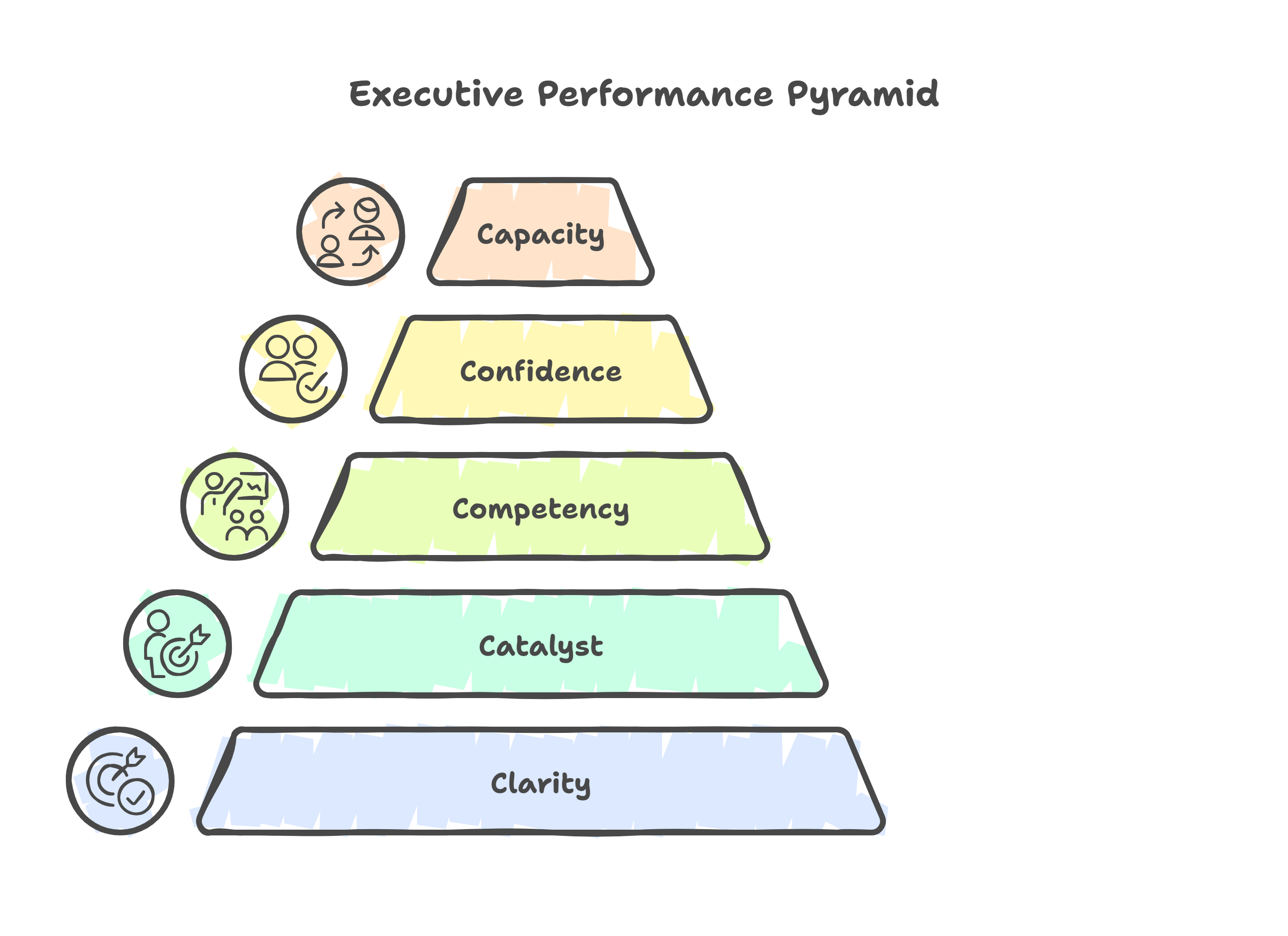
Using the 5 Cs from our performance engineering approach — Clarity, Catalyst, Competency, Confidence, and Capacity — we ran a diagnostic across each executive. The result was revealing: different people were being held back by different Cs. Once we treated each C as a distinct lever, Executive Performance improved sustainably.
The 5 Cs Explained (and what to look for)
1. Clarity
Clarity is where all performance starts. If someone doesn’t know exactly what outcome is expected, or how success will be measured, they can be busy forever and still miss the point. In the CEO’s team, one executive was executing multiple initiatives that looked productive but did not align with the company’s strategic milestones.
Look for vague briefs, conflicting priorities, or an absence of measurable goals. Clarify objectives, timelines, scope, and constraints. When clarity is restored, effort becomes directional.
2. Catalyst
The catalyst is the intrinsic or extrinsic motivation that drives someone to act. Even with clear direction, people need a reason to get out of bed for the task. For the CEO’s team, a lack of perceived impact and misaligned incentives drained urgency.
Assess whether the work connects to personal or organizational purpose, and whether incentives and recognition reinforce the desired behavior. Catalysts can be small (public recognition) or structural (revised incentives), but they must be real.
3. Competency
Competency is the technical skill set required to deliver. This is often the easiest to fix: training, mentoring, or hiring can close gaps. One chief officer in the group simply needed a tighter set of financial modeling skills to make faster decisions.
Map required skills against current skills. Where gaps exist, create focused development plans with measurable outcomes and timelines.
4. Confidence
Confidence and self-efficacy determine whether someone will act decisively. Confidence is both general and task-specific. Even competent people can hesitate if they doubt they can succeed in a new context.
Build confidence with early wins, coaching , and by removing unnecessary penalties for reasonable risk. In the case I worked on, pairing less confident leaders with trusted mentors unlocked bold moves that were previously stalled.
5. Capacity
Capacity is about time, energy, and bandwidth. You can have clarity, drive, skill, and belief, but if an executive is overloaded or dealing with serious personal disruption, performance will suffer. One leader’s capacity had been eroded by multiple interim responsibilities; reallocating tasks restored performance almost immediately.
Evaluate workload, role clarity, and life stresses. Where capacity is limited, reduce commitments, delegate, or provide additional resources and support.
Turning Diagnosis Into Action
The power of treating Executive Performance as five distinct levers is that it makes interventions specific. Instead of vague coaching or general team-building, you can be surgical: tighten objectives for clarity, rework incentives for catalyst, map capability for competency, create confidence-building experiments, or rebalance workload to restore capacity.
Practical Checklist For CEOs: Executive Performance Toolkit
· Clarity : Define one-sentence outcome, three success metrics, timeline, and constraints for every major priority.
· Catalyst : List what motivates each executive and align one incentive or recognition method to that motivator.
· Competency : Do a skills gap matrix and assign targeted learning or hiring actions with deadlines.
· Confidence : Schedule low-risk “win” projects, assign mentors, and track behavioral changes monthly.
· Capacity : Audit time allocations for two weeks, identify tasks to delegate, and adjust role scope where needed.
Final Thoughts
Executive Performance improves fastest when you stop treating problems as personality flaws or vague resource issues and start treating them as measurable levers. The 5 Cs framework gives you a diagnostic lens and an operational playbook.
If a leader is underperforming, ask which Cs are strong and which are weak. Tackle the weak ones intentionally and you’ll turn busy executives into consistent deliverers.