

Accountability: The Hidden Layers That Make or Break Champion-Level Teams

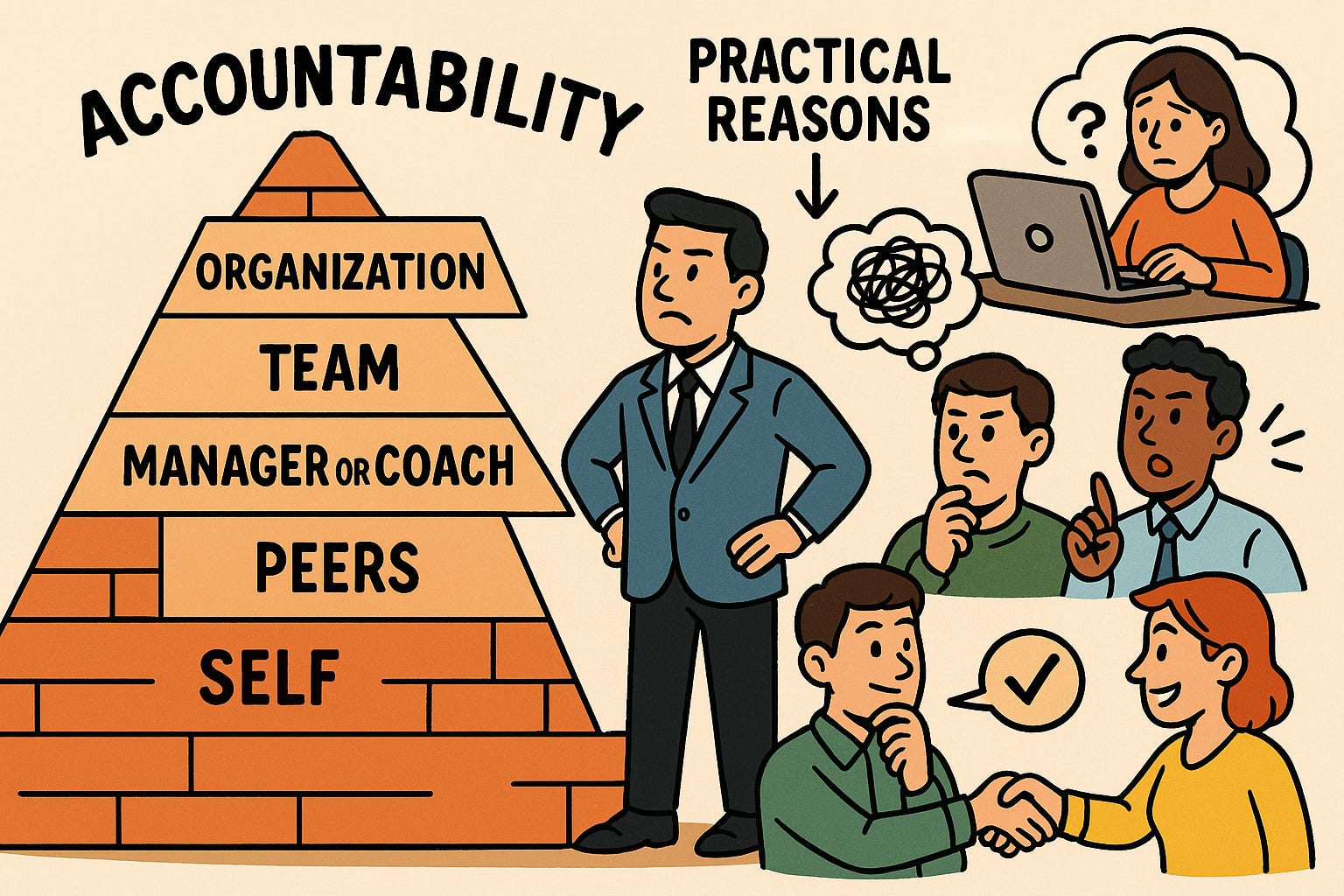
Accountability is one of the biggest barriers to champion-level performance I see in organizations. Senior leaders talk about it constantly, but most of the conversation misses the point. Accountability is not simply a moral failing or a lack of will. It is multilayered, practical, and fixable once you diagnose the right root cause.
When I look at teams that consistently underdeliver, I find two patterns. First, low engagement, which Gallup reports affects roughly 68 percent of employees worldwide, correlates with poor follow-through. Second, large initiatives fail at scale, often because ownership and follow-up are ambiguous. McKinsey and others estimate about 70 percent of transformations underperform or fail, and a lack of clear accountability is a common reason.
Why Accountability Is Misunderstood
Most people treat accountability as if it is a binary choice. Someone did not do the task; therefore, they are not accountable, and must be punished or shamed into doing it. That view is simplistic and expensive. Accountability encompasses a variety of dimensions. If you understand which facet is missing, you can fix it.
Accountability is really misunderstood. People assume the person just does not want to do it. But there are multiple layers and many tactical reasons why people do not follow through.
The Five Layers of Accountability
When I advise leaders, I first ask, “who is this person accountable to, and for what?” Accountability is not a single relationship. It encompasses five distinct layers. Identifying the weak layer is the fastest path to improvement.
1. Accountability to self
This is self-integrity. If someone tells themselves they will get up early to exercise and they do, they are accountable to themselves. For many people, this layer is weak, and that weakness bleeds into work obligations.
2. Accountability to peers
Some people will not disappoint a colleague. Peer pressure done well, through trust and mutual respect, creates powerful motivation. This is why peer mentoring and buddy systems work in champion level teams.
3. Accountability to the manager or coach
One-to-one accountability matters. The relationship quality between a direct report and their leader often determines whether commitments are kept. If the manager is respected and trusted, follow-through increases.
4. Accountability to the team
Individuals often prioritize the team’s goals and the team’s system. When the team norms are strong, members hold each other to a standard, and that supports consistent execution.
5. Accountability to the organization
The most abstract and frequently the weakest layer is accountability to the organization or its leadership. Many employees rarely interact with senior leaders and therefore do not feel direct ownership of company-level outcomes.
Practical Reasons People Are Not Accountable
Once you know which layer is weak, you still need to look at tactical causes. These are the common, fixable reasons people do not follow through.
Lack of commitment, or unclear commitment. They never fully agreed to the scope or deadlines.
Conflicting priorities. The person believes B or C is more important than A.
Insufficient skill or confidence. They do not know how to do the work or fear failure.
Task dislike. People gravitate to work they enjoy and are typically more reliable doing it.
Limited capacity. This can be time, cognitive load, or emotional bandwidth.
Poor systems. Ineffective personal or team systems undermine consistent execution.
What Senior Leaders Should Do Next
Accountability problems are solvable. The work is diagnostic and tactical. Here is a practical playbook you can use tomorrow.
Diagnose the layer, not just the symptom. Ask who they are not accountable to. Is it their peer, manager, team, or the organization?
Ask why. Use the tactical checklist above. Was the commitment explicit? Are priorities aligned? Do they have the skill and capacity?
Design targeted fixes. Examples:
If the peer layer is strong, create formal peer mentoring and public peer commitments.
If skill or confidence is the issue, invest in training plus low risk practice and feedback loops.
If capacity is the problem, reprioritize, remove work, or add support.
If systems fail, help the person adopt simple, repeatable tools for task management and handoffs.
Make commitments explicit. Written agreements, short recurring check ins, and clear acceptance criteria remove ambiguity.
Measure and iterate. Track outcomes tied to specific accountabilities and review them regularly. Celebrate wins and adjust when patterns repeat.
Small Shifts, Big Impact
Sometimes shifting just one layer moves the needle. If an individual does not feel accountable to self but deeply values a trusted peer’s opinion, pairing them creates follow-through. If they care about the manager, amplify that relationship with clearer one to one expectations. Leaders who get into the weeds and diagnose root causes stop wasting time with blanket statements about people being lazy or uncommitted.
Accountability is not a blame game. It is a set of relationships and practical constraints. Solve the relationships, clarify the commitments, remove the blockers, and you will see performance improve. That is where transformational change actually starts.
Final Thought
If you want teams that consistently deliver, build systems that make accountability obvious and easy. Identify the layer that is weak, diagnose the tactical causes, and fix those causes deliberately. Accountability, when properly understood, becomes the engine of high performance, not the excuse for conflict.